Many procurement and engineering teams have encountered a puzzling issue: Despite the product parameters indicating a temperature tolerance of up to 70°C, solar road studs still frequently fail and are scrapped after being installed on desert sections. In fact, high temperature is not the core cause of the stud damage; the intense diurnal temperature cycle is the hidden killer. According to the ASCE 1994 Saudi pavement field test data, the temperature span of the local pavement can reach 3°C to 72°C, and extreme temperature swings continuously impact the structure of solar road studs.
In this next blog post, NOKIN will analyze how the temperature cycle gradually wears down solar road studs from three major dimensions: welding points, batteries, and seals, based on real data, damage principles, core failure points, and purchasing solutions, helping everyone avoid selection mistakes when choosing for desert sections.
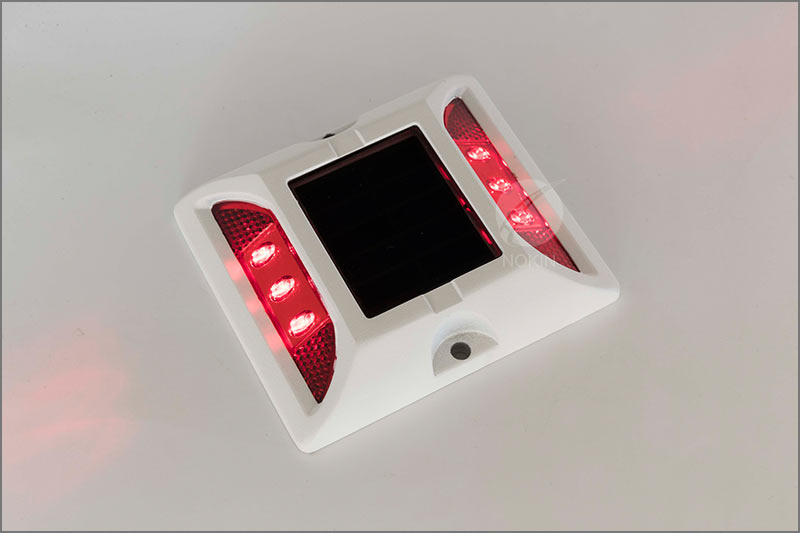
According to the ASCE 1994 Saudi arid environment pavement research report, there are significant differences in pavement temperature ranges in different desert areas, and the data has strong engineering reference value.
At the same time, relevant pavement monitoring data from PMC and Reuters also supplement that in the summer of the desert, under direct sunlight, the surface temperature of asphalt pavement can reach 74–82°C, far exceeding the rated high-temperature parameters of conventional studs. The specific measured temperature range is as shown in the table below:
| Desert Section Area | Real-World Measured Pavement Temperature Range |
| Saudi Coastal Pavement | 3°C–72°C |
| Saudi Inland Pavement | 4°C–65°C |
| Desert Summer Asphalt Surface Exposure | 74°C–82°C |
Most people confuse the three temperature concepts, which is also the key reason for selection errors. Environmental temperature, pavement surface temperature, and internal temperature of the sealed stud, the three values are completely different.
Air dissipates heat quickly, and the temperature change is relatively gentle during the day and night. Asphalt pavement has an extremely strong heat absorption and storage capacity, warming up rapidly during the day and cooling down rapidly at night, with a temperature fluctuation amplitude much greater than that of air.
Solar road studs have a sealed cavity structure, and the internal air, battery, and circuit board will form a heat accumulation effect. During the period of intense sunlight exposure, the internal temperature of the stud often becomes higher than the surface temperature of the pavement, exacerbating the wear of internal components.
It needs to be objectively stated that the 3°C low temperature record in Saudi pavement is the annual extreme value data including winter nights, not the regular temperature during the desert summer nights.
The core value of this data is to reflect the extremely large temperature swing throughout the year of the desert section, rather than representing the daily operating temperature. This alternating high and low temperatures environment is more likely to damage the stud equipment than a single high or low temperature.
The parameters of most solar road studs on the market only indicate the static working temperature range, such as -20°C to +70°C. This parameter can only prove that the product can work briefly normally in a constant high and low temperature environment.
However, static temperature tests completely cannot simulate the daily repeated heating and cooling conditions of the desert. Constant temperature only brings fixed material deformation and will not generate continuous structural stress. While the temperature cycle causes materials to repeatedly expand and contract continuously, generating periodic fatigue stress, which is a potential failure risk that cannot be detected by conventional static temperature tests.
The daily temperature difference in desert regions is extremely large. Every day completes a complete temperature cycle of heating and cooling, equivalent to the stud bearing a thermal shock once. In the long term, hundreds of thermal shock events can be formed in a year. This high-frequency, long-cycle repeated stress action will gradually exhaust the welding points, batteries, and sealing structures of the stud, ultimately causing equipment failure.
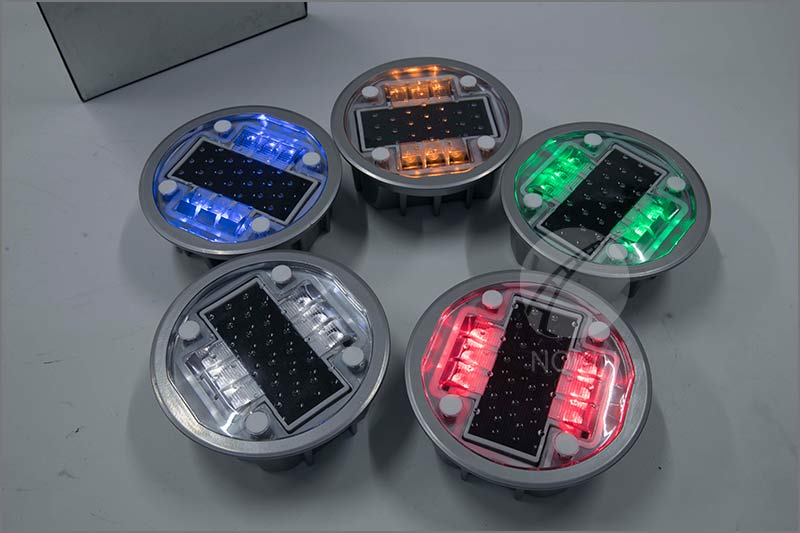
According to the review in ScienceDirect and the conclusion of Ansys thermal-mechanical fatigue research, the core cause of circuit board welding point failure is the mismatch in CTE (Coefficient of Thermal Expansion) thermal expansion coefficient.
The electronic components inside the anchor, the copper foil lines, and the thermal expansion coefficients of the PCB board are all different. Each time the temperature rises, the expansion and contraction amplitudes of different materials are different; when the temperature drops, the contraction degree is also inconsistent.
Each temperature cycle causes the welding points to endure a micro pull and bend. The single deformation is imperceptible to the naked eye, but over time, it will form metal fatigue and eventually result in fine cracks.
The welding point cracks will not directly cause the anchor to be completely scrapped. It has strong concealment. When the temperature drops, the cracks may close together, and the circuit will temporarily conduct, and the anchor will emit light normally.
When the temperature rises, the cracks will slightly expand, causing poor circuit contact and resulting in flashing lights, dimming lights, insufficient brightness, etc. This intermittent failure is difficult to detect and is often misjudged as battery or circuit program problems, ignoring the core root cause of welding point fatigue.
The extreme high-temperature environment during the day in the desert will continuously accelerate the decomposition rate of the battery’s electrolyte inside the solar road stud. Long-term high-temperature operation will cause the active substances inside the battery to accelerate decay, directly shortening the overall lifespan of the battery. At the same time, high temperatures will increase the battery’s self-discharge rate, resulting in a decrease in the battery’s storage efficiency during the day and insufficient battery life at night, causing the anchor to turn off prematurely.
Combined with the research on battery environmental adaptability, the damage to the energy storage battery caused by low temperatures is also significant. In low-temperature environments, the effective capacity of the battery will rapidly decline, and the charging and discharging efficiency will significantly decrease. Especially at temperatures below 0°C, if the battery undergoes charging, it may experience problems such as cell bulging and internal micro-short circuits, not only affecting the range but also potentially causing circuit faults.
The batteries of solar road studs in deserts experience “high-temperature aging + low-temperature degradation” in both directions every day. The damage caused by a single high-temperature-low-temperature switch is limited, but after daily cycles, the battery performance will rapidly decline sharply. This is also the core reason why many solar road studs in desert sections experience range collapse and inability to store electricity after using for half a year to one year.
The outer shell, sealant, and base of the solar road stud are made of different materials, and their thermal expansion and contraction coefficients are different. Under the action of daily temperature cycles, the sealing interface will repeatedly compress and relax.
This continuous pumping-like opening and closing can be understood as the “breathing effect” of the anchor. Under long-term repeated action, the sealant will gradually age and detach, and the sealing gap will slowly expand, continuously reducing the protective performance.
In the rapid cooling nighttime environment, the residual air inside the sealed cavity of the solar road stud may experience a sudden temperature drop. The unsealed cavity may produce trace condensation water vapor under specific conditions.
These tiny amounts of moisture cannot be quickly expelled and will accumulate inside the anchor over time, potentially corroding the circuit board, welding points, and batteries, gradually causing short circuits, lamp bulb damage, and other failure problems.
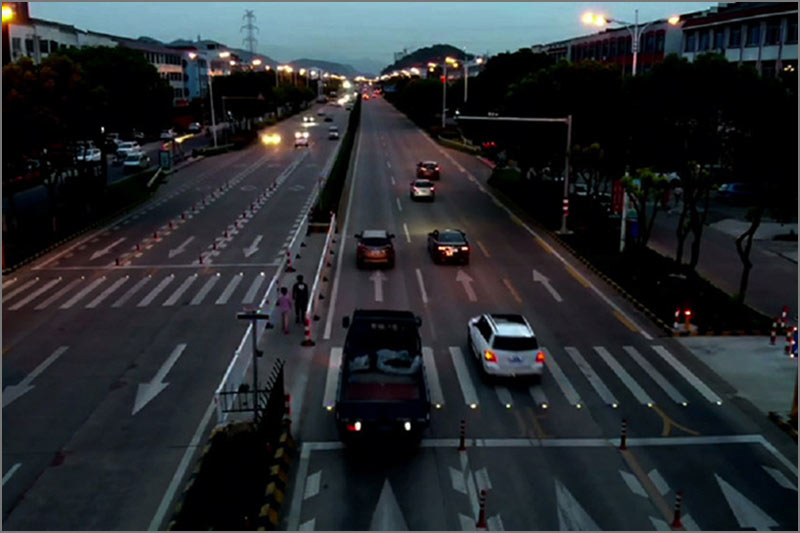
When purchasing and selecting, do not judge product quality solely based on the manufacturer’s marked -20°C to 70°C static working temperature parameters. Static parameters cannot reflect the adaptability of the desert environment.
It is necessary to proactively request the temperature cycling test report from the supplier, with a focus on verifying the failure conditions of the product after undergoing hundreds or thousands of alternating high and low temperature cycles. This is the core basis for the durability of desert solar road studs.
For the desert temperature difference cycling environment, high-quality solar road studs need to have three special designs to fully resist temperature difference damage:
The solid encapsulation process significantly reduces the internal cavity, eliminates the accumulation of condensation water vapor, and at the same time fixes the internal components to reduce the risk of deformation and pulling.
Equipped with a wide temperature range dedicated battery + intelligent BMS management system, it can adapt to an extremely wide temperature range environment, suppress battery loss under high and low temperatures, and avoid charging safety hazards.
Adopting multiple sealing redundancy design, strengthening the stability of the sealing interface, weakening the breathing effect caused by thermal expansion and contraction, and delaying the aging speed of the seal.
When connecting with the solar road stud supplier, you can clearly propose data acceptance requirements, forming a standardized verification logic, and forming a complementary system with the UV yellowing test acceptance system.
Focus on requesting three core data: a complete temperature cycling test curve, effective cycle times, and clear failure criterion standards. Eliminate oral quality commitments without data support.
The main reason is not the single-day extreme high temperature, but the large daily temperature difference cycle in the desert. Repeated thermal shocks will continuously damage the solder joints, batteries, and sealing structures of the solar road studs. Over time, cumulative fatigue damage will occur, eventually leading to the failure of the studs and making the static high-temperature resistance parameters unable to adapt to this working condition.
Temperature cycling refers to the process where the environmental temperature alternately changes between high and low temperatures. In the desert, the daily day-night alternation forms one temperature cycle. Continuous thermal mechanical stress can cause material fatigue, solder joints cracking, battery aging, and sealing failure. This is the biggest risk for the long-term use of outdoor solar road studs.
Ordinary models are difficult to be long-term compatible and can only temporarily withstand a single high or low temperature. Only the desert-specific solar road studs that have been professionally optimized for temperature cycling, equipped with wide-temperature batteries and redundant sealing designs, can long-term adapt to the harsh conditions of alternating 70℃ high and low temperatures.
Abandon the single static temperature parameter verification and prioritize checking the third-party temperature cycling test report. Focus on verifying the number of test cycles, the temperature fluctuation range, the component integrity rate of the solar road studs after the test, and the failure determination criteria. Use the measured data instead of the manufacturer’s promotional parameters.
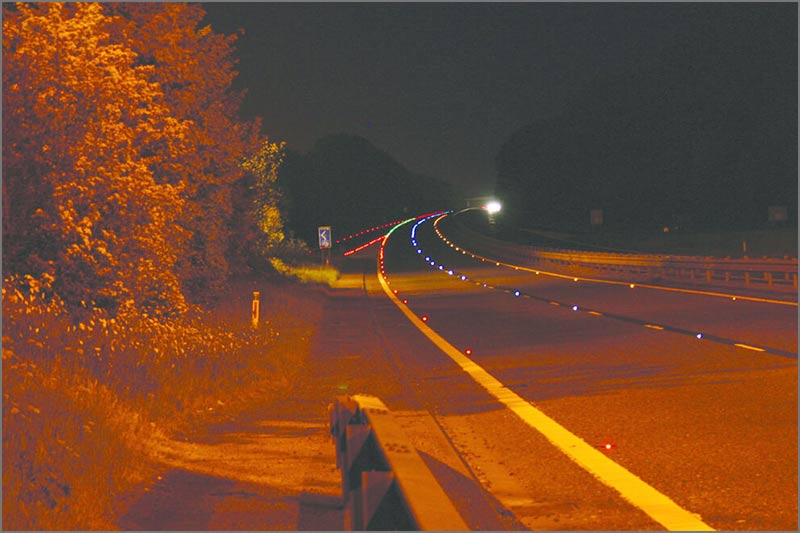
In summary, the main reason why the desert environment destroys the core components of solar road studs is not the short-term peak high temperatures, but the repetitive temperature cycles ranging from 3°C to 72°C on a daily basis.
The fatigue of solder joints, the two-way loss of batteries, and the moisture absorption of the sealing breathing mechanism are all caused by the temperature difference cycles. When selecting and purchasing, there is no need to overly focus on the static temperature resistance parameters. Instead, the key is to verify the actual measured temperature cycle data of the product, so as to truly select durable solar road studs suitable for desert conditions.